Why Poland and Ukraine are fighting over a World War II massacre

Karol Nawrocki and Volodymyr Zelensky / Euroradio
The conflict between Poland and Ukraine has not subsided for more than a month. So far, it has not gone beyond public statements and the throwing of awards, among them Poland's highest order — the White Eagle. But who knows how far the allies in the anti-Russian coalition might go in their fit of "historical justice."
Behind the uproar lies a dispute surrounding the history of the Ukrainian Insurgent Army (UPA) and the events in Volhynia in the 1940s. What is the essence of these events from 80 years ago? Why does this topic still give our neighbors no peace? Let us figure it out together.
The White Eagle as a symbol of the conflict
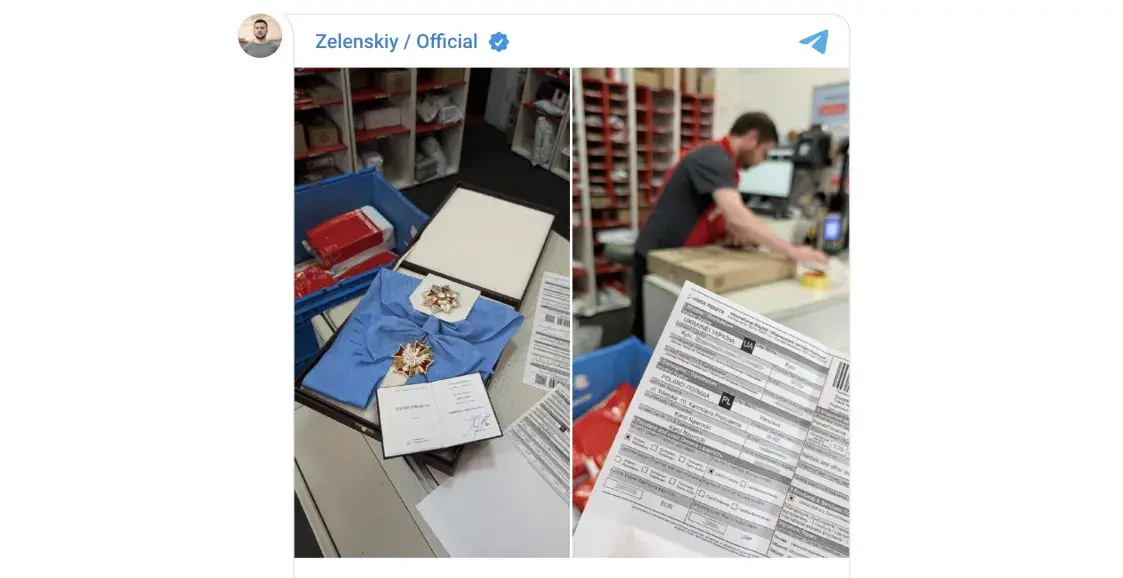
The Ukrainian courier service "Nova Poshta" accepted a parcel addressed to the chancellery of the President of Poland. Inside the box was Poland's highest state honor — the Order of the White Eagle (awarded since 1705). The sender of the parcel was Volodymyr Zelensky.
The chain of events that led directly to this parcel began on May 26. On that day, the Ukrainian president awarded the Special Operations Center "North" of the Armed Forces of Ukraine the honorary name "Heroes of the UPA."
Poland's president, a conservative and, incidentally, a historian, Karol Nawrocki, reacted immediately. He stated that Zelensky's move "proves that Ukraine, from the point of view of its mentality, which glorifies the bandits and murderers of the Ukrainian Insurgent Army, is not ready to be part of the European family." He soon proposed that a session of the Order of the White Eagle consider the question of stripping Zelensky of the award.
The session took place on June 8. The decision was not made public. But journalists learned that it had been recommended to strip Zelensky of the award if "the Ukrainian side takes no steps."
Zelensky later recounted that there had been attempts between the two sides to resolve the conflict diplomatically. The head and first deputy head of the Office of the President of Ukraine, Kyrylo Budanov and Serhiy Kyslytsya, traveled to Warsaw. But to no avail.
"[Then] I proposed that the Polish president meet. I said: let us hold a conference. The Polish president takes the next step: he says there is no place for Ukraine in Europe, because it is bad for the Polish farmer. In order to then pressure [Prime Minister Donald] Tusk to block the cluster. These things are connected," — Zelensky recounts the development of the conflict.
In the end, the award presented to Zelensky by the previous President of Poland, Andrzej Duda, in 2023 was sent back to Warsaw. And along with it — other awards given by Poland to Ukrainian politicians over the years. They were returned by presidents Leonid Kuchma, Viktor Yushchenko and Petro Poroshenko, Kyrylo Budanov, Foreign Minister Andrii Sybiha and former Prime Minister Volodymyr Groysman.
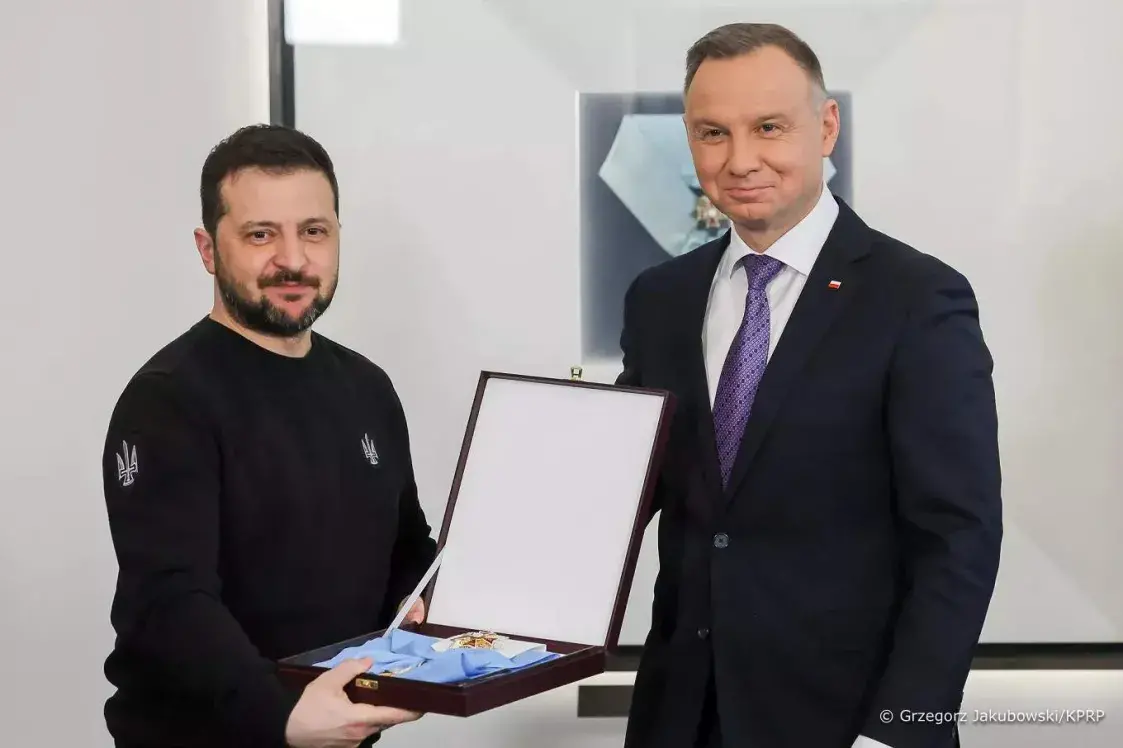
Throughout all of this, the spokesperson for the President of Poland, Rafał Łaśkiewicz, emphasized that Nawrocki's decision "is not directed against Ukrainians, and Russia remains the enemy of Ukraine and all of free Europe." Warsaw considers Zelensky to be the cause of the crisis.
Historians and politicians without agreement
The "Volhynia Massacre" is the term historians use for the ethnic cleansing carried out during the German occupation of Western Ukraine by Ukrainian nationalists in 1942–1944. Its peak is considered to have been the night of July 10–11, 1943, when, according to Polish historians, UPA units, supported by the local Ukrainian population, attacked around 100 villages with a predominantly Polish population.
It is important to note here that Ukrainian historians question the coordinated nature of that attack.
The exact death toll remains unknown to this day. According to some estimates, the figure is more than 50,000 Poles and several thousand Ukrainians. Among the victims were also many representatives of other national minorities — Russians, Jews, and Armenians.
There is still no consensus between Polish and Ukrainian historians regarding those events — from their causes to the number of victims and the terminology used. For example, Ukrainian historians call those events a tragedy, while Polish historians call them a massacre.
In the 1940s, Volhynia was under pressure from several sides simultaneously. The forces of the Third Reich, the Red Army and Soviet partisans, the UPA, the Polish Home Army, and other formations accountable to no one all operated there.
That is why Ukrainian historians argue that the events in Volhynia should be viewed as mutual crimes against the civilian population — not as a planned genocide, even though that is the very word the Polish Sejm enshrined in 2016.
In 1994, Poland and Ukraine signed an agreement on the preservation of memorial sites and graves of victims. Three years later, a joint declaration on reconciliation and mutual understanding was signed.
In 2003, Presidents Leonid Kuchma and Aleksander Kwaśniewski asked each other for mutual forgiveness. And on the eve of the 70th anniversary of the events in Volhynia (2013), in a joint statement they wrote: "We ask our compatriots to do everything possible so that the commemoration of the victims of past conflicts does not become an instrument for inflaming relations and squandering the achievements of the reconciliation process between our peoples."
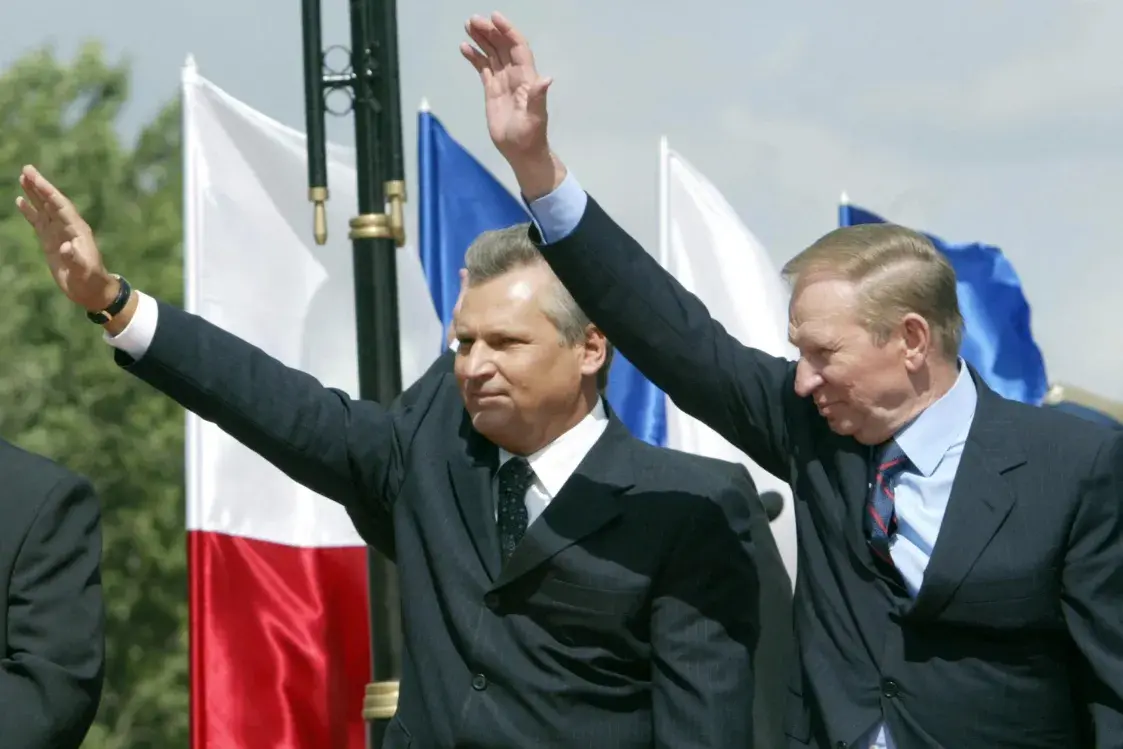
Their successors — Viktor Yushchenko and Lech Kaczyński — did something similar.
The mood changed dramatically in 2015–2016. Ukraine had already witnessed the Revolution of Dignity, followed by Russia's annexation of Crimea. The war for Donbas had begun. And in Poland, conservatives from the Law and Justice party had come to power.
The Ukrainian side repeatedly emphasized that the glorification of the OUN-UPA and their leaders (Stepan Bandera and Roman Shukhevych) is primarily connected to their resistance to Soviet occupation and is not directed against Poles or the events of the 1940s in Volhynia. Nevertheless, in 2016 the Polish Sejm approved July 11 as the National Day of Remembrance of the Genocide Committed by Ukrainian Nationalists against Citizens of the Second Polish Republic.
And in 2017, the exhumation of victims of the Volhynia Massacre was halted in Ukraine. This was how the Ukrainian Institute of National Memory responded to the destruction of UPA soldiers' monuments in Poland.
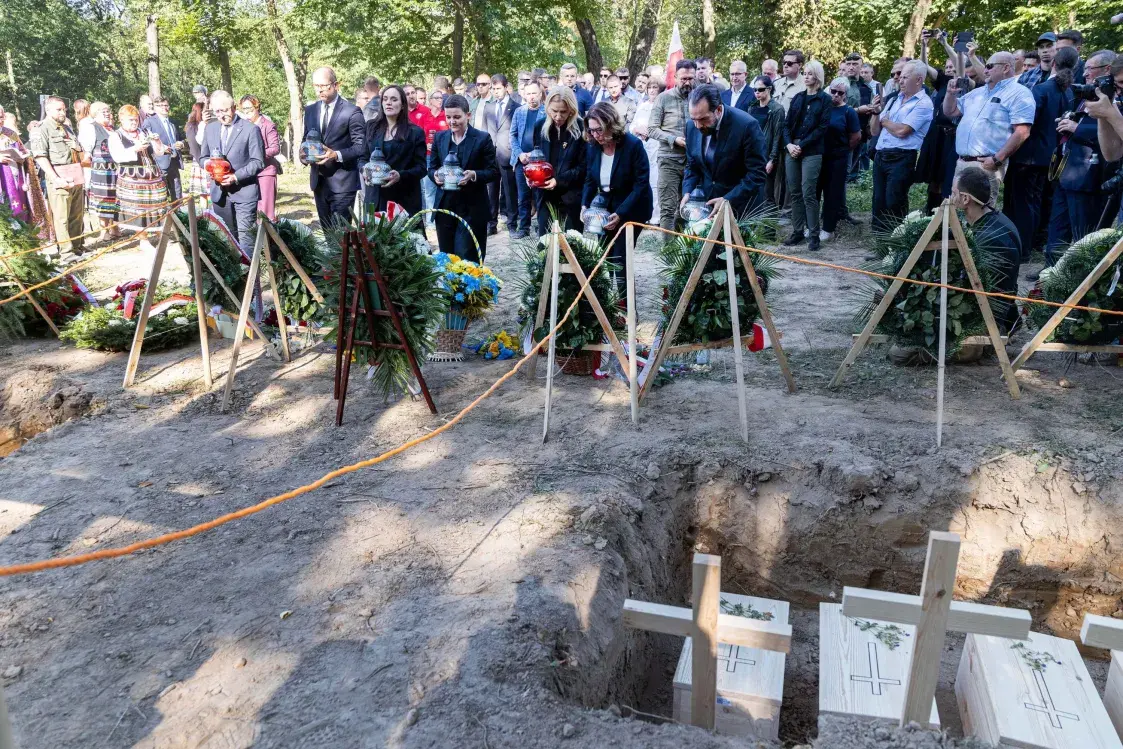
Only toward the end of 2024 did the Polish and Ukrainian foreign ministers, Radosław Sikorski and Andrii Sybiha, announce that they had reached an agreement and that the process would be resumed. The first reburials of "Volhynia" victims took place in the spring of 2025. Both politicians and historians described this step as a breakthrough in Polish-Ukrainian relations.
The White Eagles have been returned. What happens next?
The topic of the Volhynia Massacre periodically resurfaces in the Polish public agenda. This is often linked to political events within the country — for example, elections.
When Karol Nawrocki was still a presidential candidate, he repeatedly mentioned Ukrainians, and with them Volhynia. And in 2025 he declared: "In defending Polish interests, I would like to clearly repeat that until our [with Ukraine. — Euroradio] issues are resolved, including the exhumation of victims of the Volhynia genocide in Ukraine, I see no future for Ukraine in the European Union and NATO."
Russian propaganda actively exploits such statements. It does not even need to make any additional effort — it can simply declare that "Ukraine is losing its allies."
Yet the Polish internet is also seething. All the while, as some spread the image of "Ukrainians-Banderites," others are making the case for why even such a diplomatic conflict does not equal halting aid to Ukraine.
It is also important to consider that around 1.7 million Ukrainians currently live in Poland. They are hostages to the conflicts between politicians. On June 9–10, 2026, a poll was conducted for the publication Rzeczpospolita: did Zelensky's decision to name a Ukrainian unit "Heroes of the UPA" affect Poles' attitudes toward Ukrainians and Ukraine? 51.9% of respondents noted a worsening, 31.9% said it had no effect on them, 11.7% had no opinion on the matter, and 4.5% replied that their attitude had, on the contrary, even improved.
For now, Poles and Ukrainians are not hearing or understanding each other. So believes Polish publicist Michał Potocki:
"Ukrainians do not understand how important and painful the matter of the victims of the Volhynia tragedy is for a large part of Polish citizens, and how for many years we were unable to work in Ukraine, to search for the remains of victims in order to give them a proper reburial.
On the other hand, in Poland it is often not understood that for Ukraine the UPA is above all a symbol of struggle against Moscow, regardless of what the country with such a capital was called at the time. And these nationalist symbols are being used instrumentally by the Ukrainian authorities in order to additionally motivate people to fight against Russia, which is also understandable."
On June 23, in connection with the escalation of Polish-Ukrainian relations, dozens of Polish and Ukrainian media outlets published a joint appeal. They write that "for years Russia has been spreading disinformation on a large scale, trying to drive a wedge between Poles and Ukrainians, and the current crisis in relations makes this easier."
In the text, the authors draw attention to the fact that for the past 12 years Ukraine has been defending Poland and Europe from Russian imperialism. They also recall how, at the very beginning of the full-scale war, Poland together with European allies rushed to Ukraine's aid, "providing military equipment, money, humanitarian assistance and taking in almost 2 million Ukrainian refugees." And the scale of that solidarity at the time "amazed the world."
Now, however, according to the journalists, politicians are using the tragic moments of Polish-Ukrainian history for their own ends. But the common task remains — to stop Putin's Russia.
"The time for serious conversations about the past, for the acknowledgment of sins and reconciliation, will come when Ukraine — with the support of its allies — defeats the aggressor. This is a difficult time for Poles and Ukrainians. Our politicians must show wisdom and common sense, seek mutual understanding and a way out of the crisis.
Our societies must not succumb to manipulation, but continue to support one another. For the sake of a shared future in which Poland and Ukraine can together play a key role in the European Union."
AI translated, human fact-checked