Pressure on relatives, seizure of property: how Belarus’ “in absentia” repression works

“in absentia” repression / euroradio.fm
Belarusians are being persecuted for political reasons even from abroad — a practice that has been in place for several years. While it does not lead directly to imprisonment, human rights defenders stress that “special proceedings” — trials held in absentia — are themselves a form of repression. In its report, the International Committee for the Investigation of Torture also notes that this form of persecution of Belarusians may amount to a crime against humanity.
Lawyers without a defence
As human rights defenders point out, defendants in trials held in absentia are formally provided with legal counsel. There is, however, an important caveat: these lawyers are appointed by the state and cannot be refused. In practice, state-appointed lawyers almost never communicate with their “clients”.
“I asked the court for documents explaining what exactly I was accused of. But the court replied that all the documents had been provided to a lawyer in Belarus — the one appointed by the court, by the regime, by the system. I found her email address and phone number, but she never responded to anything. I also sent formal letters, and again there was no response. Nobody reacted,” one defendant in a “special proceedings” case told the committee.
Another defendant said that when he asked for details about his case, he was simply “directed to the internet”.
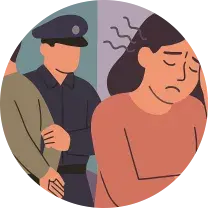
“I believe she (the defence lawyer) did not uphold my rights because she did not share any information with me. I have absolutely no idea what she said in court; I do not know whether she admitted guilt on my behalf. I believe the very fact that I do not know what she said in court completely rules out the possibility that she was protecting my rights,” human rights defenders quote a Belarusian prosecuted “remotely” as saying.
Property seized, relatives pressured
Authorities can confiscate the property of those found guilty in “special proceedings” cases — and they actively make use of this power. The property is seized to cover fines imposed on defendants.
“I was sentenced to pay a fine. This fine is not compensation for any damage allegedly caused by my ‘criminal’ actions. What is interesting, first of all, is that the amount of the fine corresponds exactly to the market value of the property. And secondly, what is even more interesting is that the fine was imposed on me under amendments to the Criminal Code adopted in March 2023. Yet the offence for which the fine was imposed as punishment was allegedly committed before January 2023,” the report quotes one defendant as saying.
But property seizures and even being designated a “terrorist” after a trial are not considered the worst consequences.
“The most painful thing about all these special procedures is the pressure placed on your relatives. It means that because of you, your loved ones are persecuted even though they bear no responsibility for your actions. Everything else provokes a kind of healthy anger, but this is a situation in which there is very little you can do,” defendants say.
A violation of all international norms
The International Committee for the Investigation of Torture notes that Belarus’ practice of special proceedings violates numerous norms of international law. The fact that Belarusians living abroad are being targeted also gives these repressions an extraterritorial dimension.
“The current practice of applying special proceedings in the Republic of Belarus bears all the hallmarks of the crime against humanity of persecution, as defined under international criminal law, and requires proper legal assessment at the international level,” the human rights defenders conclude.