The regime doesn’t want to discuss repression.” Tsikhanouskaya on dialogue with Lukashenka

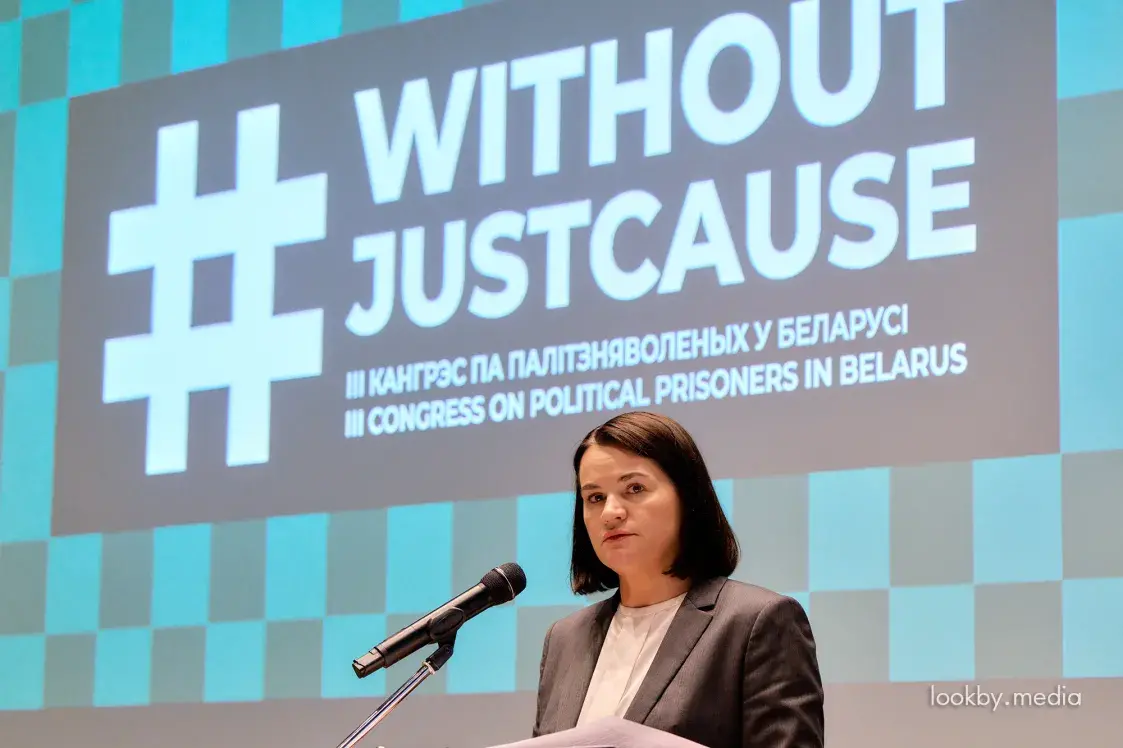
Sviatlana Tsikhanouskaya / LookByMedia
Speaking at the GLOBSEC Forum in Prague, Maria Kalesnikava said that the focus should be not on fighting Lukashenko, but on fighting for Belarusians. The remark sparked intense debate among Belarusians. Has the time come to rethink the strategy?
The issue was raised by journalist Zmitser Lukashuk during an interview with Sviatlana Tsikhanouskaya on Euroradio. The leader of the Belarusian democratic forces said she was glad that “such discussions are taking place at all.”
“When it is impossible to conduct large-scale opinion polls, it is very important to have space for discussions like these. Reactions and debates can at least partly help us understand the mood of Belarusians.
And it is important to say this: we also want movement toward each other. As strange as it may sound, we want dialogue with representatives of the regime. I am not talking about Lukashenko personally.
We want a national dialogue. We do not want Lukashenko and his entourage to speak with Europe or anyone else without us. We want to be part of that conversation ourselves. We regularly tell our international partners: help create a platform for dialogue where we can discuss the country’s future and protect Belarusian independence.
Such proposals exist. But the problem is that the regime will not agree to this voluntarily. It will make concessions only when it is forced to do so.
That is why sanctions, international pressure and policies of isolation matter. Without such pressure, there most likely would not have been any releases of political prisoners.
So when someone says, ‘Let’s lift sanctions and Lukashenko will show humanity and release people,’ several important things are left out of the picture.
First, those who are released can be replaced by new prisoners. Second, those who were forced to leave the country still will not be able to return safely. Third, without systemic changes in Belarus, talk of any real thaw is highly questionable.
Even if several hundred more people are released, that would be wonderful, and we would certainly welcome such steps. But we must remember that there are people whose cases we do not even know about, and repression continues every day.
That is why the regime must also make a move. For example, it could simply stop the repression. At least for a month. Show what Belarus looks like without daily detentions, searches and criminal prosecutions,” Tsikhanouskaya said.
But repression has not stopped, and the regime continues trying to reach Belarusians even in exile. The West sees this. What comes next? Tsikhanouskaya argues that concessions are not the answer.
“Today, our allies maintain a fairly firm position. There is little appetite for changing policy toward the regime. We can welcome certain working-level contacts to better understand the situation and keep channels of communication open. But every delegation that travels to Minsk should, first and foremost, raise the issues of political prisoners and the end of repression.
The problem is that the regime does not want to talk about these issues. And it is not because nobody is talking to them. They are being talked to. But as soon as the issue of political prisoners comes up, the response is: ‘We have no political prisoners,’ or ‘There is no repression here.’ The conversation is then quickly redirected to trade, logistics, fertilizers, or anything else — anything except the fate of people.
And that should not be acceptable to us as Belarusians. Our goal is different: people in Belarus must be able to live and breathe freely. That is what matters most,” said the leader of Belarus’ democratic forces.
Tsikhanouskaya also points to Russia’s war against Ukraine, in which Belarus is regarded as a co-aggressor.
“When people say, ‘Let Europe lift sanctions and then Lukashenko may release everyone,’ they often completely ignore the factor of the war.
It is impossible to remove that factor from the equation. Sanctions were introduced not only because of domestic repression, but also because of the war. And as long as Lukashenko continues to support Russia’s military policy, hosts nuclear weapons, participates in military projects and takes other steps in that direction, it is difficult to expect Europe to suddenly reconsider its sanctions policy.
On the contrary, many believe that even more tools of pressure should be used.
The experience of the past thirty years shows that it is extremely difficult to reach agreements with such regimes through goodwill alone. And we should not forget our own history,” Tsikhanouskaya said.
/ automated translation